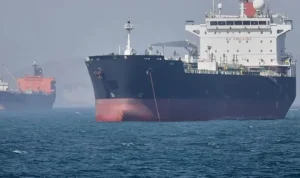

Internasional – Oil prices remain under pressure despite continuing tensions in the Middle East, creating a surprising situation for global energy markets. Normally, military conflict involving major oil-producing countries and strategic shipping routes would push crude prices sharply higher. However, the latest market movement shows that concerns about physical supply are easing faster than geopolitical risks are increasing.
On October 6, 2026, Brent crude remained around the $100-per-barrel level, while U.S. West Texas Intermediate (WTI) traded below $90. Early trading data showed Brent at around $100.28 per barrel and WTI at approximately $89.33, with both benchmarks under pressure after the previous session’s decline.
The decline may appear unusual given the continuing security risks around the Gulf and the Strait of Hormuz. However, several factors are currently outweighing the geopolitical risk premium in the oil market.
Middle East Tensions Are Still Supporting Oil Prices
The Middle East remains one of the biggest sources of uncertainty for global energy markets.
Attacks involving Yemen’s Houthi forces and Saudi targets have raised concerns about the safety of energy infrastructure and shipping routes. The Strait of Hormuz remains particularly important because disruptions in the area could affect a major corridor for international oil transportation.
Recent attacks have therefore prevented crude prices from falling much further. Traders continue to monitor developments involving Saudi Arabia, Iran and regional armed groups because a significant disruption to production or shipping could quickly change the market outlook.
However, geopolitical tension alone does not automatically cause oil prices to rise. Traders also examine whether those tensions are actually reducing the amount of crude reaching global consumers.
So far, the physical supply situation has proven more resilient than many investors initially expected.
Middle Eastern Oil Exports Have Recovered
One of the most important reasons behind the recent decline is the resilience of Middle Eastern crude exports.
Shipping data showed that crude exports from the Middle East exceeded pre-war levels on four days during the final week of September. The development suggests that producers and traders have found ways to maintain shipments despite security risks around major maritime routes.
Saudi Arabia has played an important role in maintaining supply. Higher Saudi export volumes have reduced concerns about an immediate shortage of crude in international markets.
Other Gulf producers have also continued to send oil to international buyers. This has weakened the argument that current geopolitical tensions are automatically creating a severe global supply deficit.
As a result, traders have started to focus more heavily on actual barrels reaching the market rather than simply the possibility of future disruptions.
G7 Emergency Stockpile Release Adds Supply
Another major factor is the decision by G7 countries to release emergency petroleum reserves.
The group agreed to release 100 million barrels of crude and diesel from emergency stockpiles while also committing to avoid energy export restrictions. The move is designed to reduce concerns about shortages caused by geopolitical disruptions.
For oil traders, the announcement provides an additional safety net.
If Middle Eastern supplies experience unexpected interruptions, emergency inventories can temporarily replace part of the lost supply. This reduces the immediate incentive for traders to bid crude prices significantly higher.
The announcement also sends an important psychological signal to the market. Governments are prepared to intervene if energy supplies become seriously threatened.
Consequently, the geopolitical risk premium has weakened even though military and security tensions remain elevated.
Saudi Arabia’s Pricing Decision Sends Another Signal
Saudi Arabia has also provided an important indication about market conditions through its crude pricing strategy.
Saudi Aramco reduced the official selling price of its Arab Light crude for Asian buyers. Such a decision can signal that the producer is paying close attention to demand and competition in the physical market.
When a major producer lowers its selling price, traders may interpret the move as evidence that supply conditions are becoming more comfortable or that refiners are showing less willingness to pay higher prices.
This does not mean the global oil market has suddenly become oversupplied. Instead, it suggests that producers are adjusting their strategies to changing regional demand and supply conditions.
That development has contributed to the pressure on crude benchmarks.
OPEC+ Remains an Important Market Factor
OPEC+ continues to play a critical role in determining the balance between global oil supply and demand.
In September, seven key OPEC+ countries reaffirmed their commitment to market stability and agreed to maintain their September 2026 required production levels for October. The group also reiterated its intention to monitor market conditions through regular meetings.
The decision provides the market with greater visibility regarding production policy.
At the same time, traders are assessing whether global demand can absorb available supplies. If production remains relatively strong while demand growth slows, crude prices could face additional downward pressure.
Therefore, investors are watching OPEC+ decisions alongside Middle Eastern developments rather than treating geopolitical events as the only factor affecting prices.
Why Oil Prices Can Fall During a Conflict
The current market demonstrates an important principle of commodity trading: oil prices respond to changes in supply and demand, not simply to political headlines.
A conflict can cause oil prices to rise sharply if it removes barrels from the global market. But if producers maintain exports and alternative transportation routes remain available, the physical impact can be much smaller than the political headlines suggest.
This explains why crude prices can fall even while military tensions remain serious.
Markets also price expectations in advance. When traders initially fear a major disruption, they may push prices higher. If the disruption fails to materialize, traders can unwind those positions, causing prices to decline.
That appears to be part of the dynamic currently affecting Brent and WTI.
Chronology of the Recent Oil Market Movement
The latest price action reflects several stages.
First, escalating Middle East tensions pushed oil higher as traders priced in the possibility of supply disruptions. Brent subsequently climbed above the $100 level as geopolitical risk increased.
Second, exporters continued to maintain significant crude flows despite security problems.
Third, the G7 announced the release of emergency petroleum reserves, reducing concerns about a sudden shortage.
Finally, traders began reassessing the relationship between geopolitical risk and actual physical supply. The result has been downward pressure on crude prices despite continuing regional instability.
On October 5, Brent crude fell about 1.9% to settle near $100.32 per barrel, its lowest closing level in roughly two weeks.
The following session remained volatile, with crude prices moving around the $100 threshold.
What Lower Oil Prices Mean for Consumers
A decline in crude prices can eventually benefit consumers, although the effect is not immediate.
Lower crude prices can reduce costs for refiners and fuel distributors. If the decline continues, gasoline, diesel and other petroleum products could become less expensive in some markets.
However, retail fuel prices depend on more than crude oil.
Refining costs, transportation expenses, taxes, currency movements and local government policies can all influence the final price paid by consumers.
Therefore, a $1 decline in Brent crude does not automatically translate into an equivalent decline at fuel stations.
What Could Push Oil Prices Higher Again?
Despite the current weakness, the downside for crude prices remains uncertain.
A major disruption to Gulf exports could quickly reverse the market’s direction. Any serious damage to oil production facilities, pipelines, refineries or shipping infrastructure could cause traders to rebuild the geopolitical risk premium.
The Strait of Hormuz remains particularly important. A prolonged disruption there would have much greater consequences than isolated attacks because the waterway is a critical route for global energy transportation.
Diplomatic developments between major regional powers will therefore remain a key market catalyst.
Oil Price Outlook: Volatility Is Likely to Continue
The current oil market is caught between two powerful forces.
On one side, geopolitical tensions are keeping a risk premium in crude prices. On the other, resilient Middle Eastern exports and emergency stockpile releases are reducing immediate fears of a supply shortage.
This explains why Brent remains close to $100 per barrel rather than collapsing despite periods of heavy selling.
Analysts are likely to watch three indicators closely: Middle Eastern export volumes, developments around the Strait of Hormuz, and future OPEC+ production decisions.
If exports remain stable and emergency reserves provide additional supply, crude prices could remain under pressure. Conversely, any significant interruption to Gulf production or shipping could quickly push prices higher.
Conclusion
Oil prices are falling not because Middle East tensions have disappeared, but because the immediate impact on global physical supply has been more limited than feared.
Strong regional exports, Saudi Arabia’s pricing strategy, the G7’s planned release of 100 million barrels from emergency reserves and continued OPEC+ market management have helped ease concerns about a sudden crude shortage.
Nevertheless, the market remains highly sensitive to geopolitical developments. Brent crude hovering around $100 per barrel shows that investors have not completely dismissed the risk of further disruptions.
For consumers, businesses and investors, the key question is no longer simply whether tensions in the Middle East will continue. The more important question is whether those tensions will begin to remove significant volumes of oil from the global market.
Until that happens, supply resilience may continue to outweigh geopolitical fears and keep crude prices under pressure.